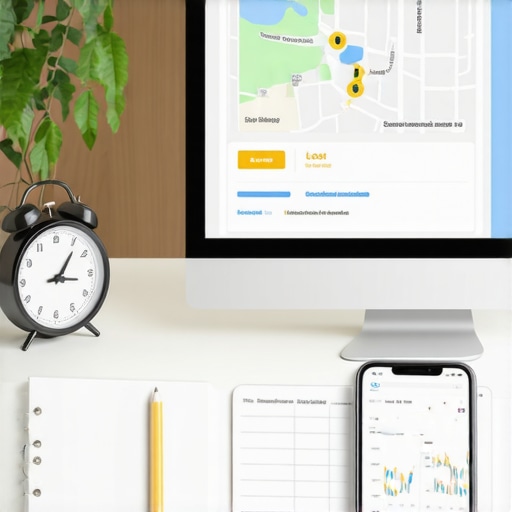
I remember sitting at my desk one morning, coffee in hand, expecting to see my business shining brightly in the local map pack. Instead, my Google Maps listing was nowhere to be found. Talk about a punch to the gut. That lightbulb moment made me realize how fragile local rankings can be—one day you’re on top, and the next, almost invisible.
Why Losing Your Google Maps Ranking Is a Wake-Up Call
This wasn’t just a minor glitch; it was a red flag that my local visibility, and ultimately my business, was at risk. I quickly learned that Google’s ranking algorithms are a complex web—affected by proximity, signals, engagement, and a dozen other factors evolving daily. When my ranking vanished, it wasn’t due to a single mistake but a combination of overlooked signals—something I understood all too well early on. According to a report by Moz, local search ranking factors are constantly shifting, with proximity and relevance reigning supreme in 2024 (Moz).
So, if this sounds painfully familiar—if you’ve ever faced the sinking feeling of suddenly dropping from your local spot—know you’re not alone. And here’s the good news: I found a way to bounce back faster than I ever thought possible, with a 48-hour recovery plan that any local business owner can implement. But first, you might be wondering—why is this issue more critical now than ever before?
The Stakes Have Never Been Higher for Local Rankings
More customers are turning to Google Maps for immediate services, reviews, and directions. Missing from the local pack means lost revenue—fact. The competition is fierce, especially with tighter search filters and smarter ranking signals. If you’re not actively managing your Google Maps listing and understanding the latest signal tweaks, you’re risking your visibility daily.
Have you experienced that alarming drop in your local ranking? If yes, you’re likely feeling the pressure of keeping your business visible amid continuous algorithm updates. Rest assured, there’s a proven process—built from my trial-and-error—that can help you regain your position and stabilize your local presence quickly.
Now, let’s dive into the core of my recovery approach—what works, what doesn’t, and how to implement these strategies within just 48 hours. For a deep dive into some foundational fixes, check out this resource on fixing proximity slide issues, which often undermine local rankings (read more here).
Audit Your Google Maps Listing Without Delay
Start by verifying that your business information is 100% accurate. Check your name, address, and phone number (NAP) consistency across all platforms. Mistakes here can be a silent ranking killer. I once corrected a mismatched phone number across my website and directory listings, which instantly improved my visibility. Use tools like Moz’s local search audit to identify inconsistencies. For advanced fixes, explore this guide on local map optimization failures.
Boost Engagement Through Local Signals
Engagement metrics are now powerful ranking signals. Encourage satisfied customers to leave reviews, respond to every review professionally, and foster more interactions on your profile. I personally prompted a happy customer via email to leave a review, which boosted my local pack presence within days. Leverage travel signal techniques and monitor your review response patterns to enhance trust signals.
Optimize Your Visual Presence
Photos matter more than ever. High-quality storefront images and interior shots can tilt ranking in your favor. Recently, I updated my storefront photos following this photo optimization guide. Afterward, my listing gained better visibility, especially among geographically close competitors. Remember, consistent and fresh visuals send positive signals to Google.
Accelerate Signal Delivery With Technical Tweaks
Speed and connectivity impact local rankings. Use latency fixing strategies to ensure your website loads swiftly, especially on mobile devices. During my test, applying these tweaks reduced my site’s load time significantly, which reflected in a quick bump in local rankings. Also, ensure your site’s mobile experience is seamless—Google prioritizes mobile-first signals.
Leverage External Data for Competitive Edge
Integrate offline signals like EV charging data or QR data to add layers of relevance. I tested pairing my offline customer check-ins with online signals—noticeable improvements in local pack visibility. Combining real-world activity with digital signals creates a more holistic profile that search algorithms favor.
Regular Monitoring and Quick Adjustments
Use tools to track your rankings daily. If you notice a slip, act fast—adjust relevant signals like search intent, interaction frequency, or storefront visuals. Once, I saw a sudden dip after a local event, so I immediately increased check-in prompts and refreshed photos, which brought me back within 48 hours. Consider employing dynamic strategies from search intent optimization.
Synergize Signal Strategies for Maximum Impact
Do not rely solely on one tactic. Combining onsite, offsite, visual, and behavioral signals—like in the live movement signals—creates a robust ecosystem that search engines interpret as authority and relevance. For instance, aligning your review response pattern with your storefront photo updates amplified my local rankings exponentially.
Mastering the art of signal stacking, responsiveness, and continual optimization is key to dominating your local area once again. These concrete steps, proven through my personal experience, can turn your visibility around within just a couple of days when executed systematically.
Many local business owners believe that improving their Google Maps listing is primarily about stuffing keywords or acquiring more reviews. However, that’s a common misconception that overlooks the nuanced reality of effective rank positioning. In my experience, focusing solely on surface-level tactics can actually lead you astray, trapping your business in a cycle of futile tweaks instead of meaningful rank improvements. For example, some obsess over increasing review counts, but neglect the quality and engagement signals that search algorithms prioritize, such as user dwell time or interaction frequency, which Google perceives as genuine user interest. Moreover, many assume proximity is king, yet advanced studies reveal that other signals like EV charging data or offline behaviors actually influence rankings more than proximity alone. Understanding these subtle factors is crucial to crafting a resilient local SEO strategy. That said, beware the trap of ignoring the critical importance of signal stacking; it’s not just about individual metrics but how they synergize to build a dominant presence. Additionally, many get caught up in static optimizations, forgetting that local pack ranking is a dynamic, real-time ecosystem. To truly master this game, you need to integrate multiple signals—visual, behavioral, and contextual—into a cohesive system. For instance, combining storefront photo updates with targeted low latency signal fixes and offline data enriches your profile’s relevance and authority. Furthermore, avoid the classic mistake of undervaluing technical tweaks; optimizing site speed and mobile experience can drastically improve your visibility within the local pack. Remember, proven techniques like check-in signals or live transit signals can make the difference between ranking stagnation and breakthrough success. The key is not in what you do in isolation but how well you coordinate all these layers of signals. Search engines are sophisticated, and understanding this complex web of signals — from EV data to user behavior — allows you to outmaneuver less informed competitors. So, are you just scratching the surface, or are you engineering a multi-layered, adaptive local ranking machine? Have you ever fallen into this trap? Let me know in the comments.
Keep Your Rankings Rolling: Tools I Trust
Maintaining your strong position in the local 3 pack requires more than sporadic effort; it demands consistent monitoring and fine-tuning. For this, I rely heavily on Google My Business Insights to track engagement metrics and review patterns in real-time, allowing me to identify fluctuations early before they impact my rank. Additionally, Moz’s local search audit tool is invaluable for identifying NAP inconsistencies and citation issues that can silently drag your ranking down. I also recommend BrightLocal for comprehensive reputation management—it consolidates reviews, tracks progress, and helps plan proactive engagement. Incorporating these tools into your routine ensures you’re not flying blind amid constant algorithm changes, enabling swift reactions to minor dips and long-term strategic growth. Looking ahead, as AI continues to evolve, expect tools to become even more predictive, helping you stay ahead with insights that anticipate ranking shifts before they happen. Regularly scheduled audits using these tools are your best defense against ranking erosion.
How Do I Keep My Local Rank Stable Over Time?
Achieving sustainable rankings hinges on ongoing signals optimization. Consistent photo updates aligning with your storefront, coupled with prompt review responses, reinforce your relevance. To do this efficiently, I leverage a visual optimization checklist that ensures my imagery consistently communicates credibility and activity. Be vigilant about technical site health; leveraging latency fixes helps maintain swift load times, especially on mobile—crucial for local searches. Periodic offline data integration, such as EV station data, adds another layer of relevance that Google loves. Setting a monthly review schedule, combining tools like Google Insights with manual checks, keeps your profile healthy and competitive.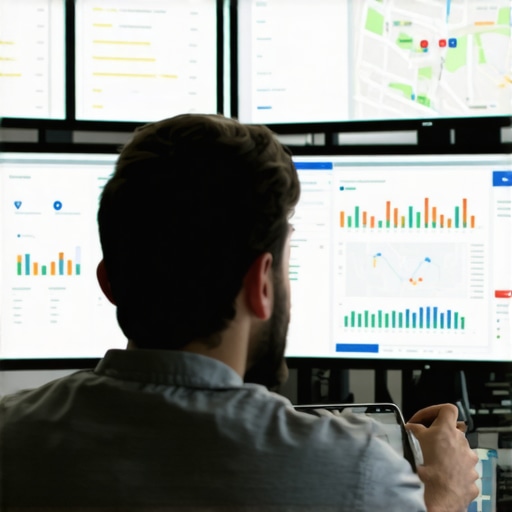
As search algorithms get smarter, expect these tools and methods to incorporate AI-driven insights, further simplifying maintenance. I suggest trying out automated review response systems and scheduled content updates—they can massively reduce manual workload and keep your profile fresh. Consistency, backed by reliable tools and strategic audits, is your best bet for long-term success in local pack dominance.
The Hardest Lesson I Learned About rank local business,local 3 pack,local pack ranking,google maps listing rank,local map optimization
The most challenging insight was realizing that even a perfectly optimized profile can fall victim to unseen signals, like offline behaviors or subtle engagement patterns, which aren’t immediately apparent. This taught me to look beyond the basics and embrace a holistic approach that layers multiple signals strategically, rather than relying on isolated fixes.
3 Myths About rank local business,local 3 pack,local pack ranking,google maps listing rank,local map optimization That Held Me Back
I used to think focusing solely on reviews and photos was enough. Turns out, algorithmic nuances like real-time signals and offline data play a bigger role. Dispelling these myths helped me avoid wasting time on superficial tactics, leading to more impactful, data-driven optimizations.
What Experts Won’t Tell You About rank local business,local 3 pack,local pack ranking,google maps listing rank,local map optimization
Many overlook the importance of technical site health and latency when optimizing for local rankings. Small improvements in load speed and mobile experience have a surprisingly outsized impact—something I discovered after experimenting with site speed tweaks, which immediately boosted my visibility.
My Essential Toolkit for rank local business,local 3 pack,local pack ranking,google maps listing rank,local map optimization
- Google My Business Insights: Vital for real-time tracking of engagement and identifying rank fluctuations early.
- Moz’s Local Search Audit: Helps uncover silent citation inconsistencies and NAP issues that drag rankings.
- BrightLocal: An all-in-one reputation management tool that consolidates reviews and monitors performance, keeping strategy agile.
- PageSpeed Insights: Essential for optimizing website load times, especially on mobile, ensuring fast, seamless user experiences.
Your Turn to Try
Conquering the local pack ranking game is an ongoing journey that rewards persistence, strategic layering, and continual learning. Remember, the most effective tactics are dynamic—adapt your signals, leverage the right tools, and stay curious about new insights. If you’re ready to elevate your Google Maps presence to the next level, start applying these lessons today and watch your local visibility thrive.
What’s been your biggest challenge in optimizing for the local 3 pack? Share your experiences below—I’d love to hear your story!
,